Best Website Builder for Contractors Who Need a Simple, Credible Lead-Generation Site
Most contractors do not need a flashy website. They need a site that answers the questions a homeowner already has in the first ten seconds.
Are you legitimate?
Do you serve my area? What kind of work do you do? Can I contact you right now without hunting for a phone number?That is the real standard. Not animation. Not clever copy. Not a homepage that wins design awards and never produces an estimate request.
If you are comparing the best website builder for contractors, it helps to start with that simple truth. A contractor website is not an art project. It is a trust tool and a lead-generation tool. It needs to look professional, load well on a phone, show current information, and make it easy for a prospect to call, fill out a form, or request a quote.
That requirement changes the answer quite a bit. The best platform for a local roofer, remodeler, dock builder, or epoxy flooring installer is rarely the one with the most bells and whistles. It is the one that gets a credible site live fast, keeps it updated, and does not create a maintenance headache three months later.
What contractors actually need from a website
In the field, contractors tend to think about websites in one of two extremes. Either they assume a website is just an online business card, or they think it needs to be a giant custom project with endless pages, special features, and a big price tag. Most small and midsize contractors need something in the middle.
A strong contractor site should support the tasks real customers want to complete. That means a visitor should be able to understand your services, confirm you are a fit, see how to reach you, and take the next step without friction. If the site does that consistently, it is doing its job.
This is especially true in home services. Whether the job is home remodeling website design, flooring contractor website design, mold remediation website design, or even a niche trade such as pool screen enclosure website design, the buying behavior is similar. People compare quickly. They judge fast. They visit on mobile. They leave if they cannot find what they need.
Google has been clear on the basics that matter for business websites: keep content current, make the site mobile-friendly, and show contact information prominently. That sounds almost too obvious, but a surprising number of contractor sites still fail on exactly those points. They have an outdated service list, an old phone number in the footer, a clunky mobile layout, or a contact form buried behind three clicks.
That is why the best choice is often the one that makes the basics hard to mess up.
The real options, and the trade-offs behind each one
When contractors ask about the best website builder for contractors, they are usually comparing four paths, even if they do not realize it yet. They can build it themselves, hire a freelancer, hire an agency, or use a managed website for small business.
A DIY builder is usually the lowest-cost path. That is why it appeals to owner-operators, new businesses, and contractors who simply need a credible online presence with basic lead capture. Platforms like Wix are commonly seen as budget-friendly for exactly that reason. You can move quickly, choose a template, add service pages, and get something live without paying a large project fee.
That route can work. In some cases, it is the right move. If you are disciplined, comfortable writing your own copy, and willing to keep the site current, a DIY builder can cover the essentials well enough. For a simple site with contact information, a few service pages, and a form, there is nothing inherently wrong with that choice.
The problem is not the builder itself. The problem is follow-through. A lot of contractor-owned DIY sites start with good intentions and stall out halfway. The homepage gets finished. The service pages stay thin. Photos never get updated. The contact form works, but nobody checks where submissions are going. Six months later, the website exists, but it is not helping much.
Hiring a freelancer changes that dynamic. A web designer for contractors can handle setup, design, and the custom touches that make the site look more polished. That is often a good fit when you want something stronger than DIY but do not need broad strategy or complex functionality. A freelancer can bridge the gap between bare-bones and custom.
An agency usually becomes more appropriate when the project is larger, more custom, or more strategic. If you need specialized development, broader brand work, or a more involved website strategy, that is where an agency tends to make more sense. The trade-off is cost. Project fees can move from the low thousands into much higher ranges depending on scope.
Then there is the managed route. A managed website for small business typically bundles the things contractors often neglect or do not want to deal with: hosting, security, backups, updates, and support. WordPress.com describes its hosting as fully managed. Wix also frames managed cloud hosting around handling security updates, server maintenance, and backups. That convenience matters more than most owners realize, because a website that nobody maintains eventually becomes a liability.
For a contractor who wants a simple, credible lead-generation site without babysitting the platform, managed service is often the most practical answer.

So what is the best website builder for contractors?
If your goal is a simple, credible site that generates leads, the best answer is usually not just a builder. It is the delivery model behind it.
A contractor does not buy “website technology” in the abstract. They buy outcomes. They buy speed, simplicity, trust, and fewer headaches. They buy the ability to say, “Yes, we have a professional site, and yes, it is being handled.”
That is why many contractors are better served by a managed setup than by pure DIY. The platform matters, but the bigger issue is whether the site stays current, works on mobile, and gets ongoing support. In practical terms, those factors affect lead flow more than most feature comparisons do.
If you truly want control and the lowest possible upfront cost, a DIY platform can absolutely be enough. If you want help but still need a custom feel, a freelancer may be the better fit. If you need strategy and deeper custom work, look at an agency. But if you want a site that looks professional and removes day-to-day website burden, the managed model often wins on common sense.
That is especially true for service businesses that do not have in-house marketing staff. A remodeler, concrete coating company, or mold remediation contractor should not have to become a part-time webmaster just to keep a site functioning.
How much does a contractor website cost?
This is where expectations often get scrambled.
There is no single fixed answer to how much does a contractor website cost, because cost varies widely based on design, features, functionality, and ongoing maintenance. That is the consistent reality across DIY platforms, freelance builds, and agency work.
A DIY path is generally the most budget-friendly because you are taking on the design, setup, and content responsibilities yourself. A freelancer adds professional help and therefore adds cost. An agency typically raises the investment further because you are paying for broader expertise and a more involved process. A managed website subscription shifts the conversation again, because instead of a large upfront build cost, you are often paying monthly for the site plus support and maintenance.
That trade-off matters. A lower upfront cost can become expensive in time if you have to manage everything yourself. A higher project fee can be worth it if the site drives results and frees up your team. The cheapest option on paper is not always the least expensive in practice.
I have seen contractors fixate on upfront price and ignore the hidden drain of delay. They spend months trying to save money with a do-it-yourself site while every week passes without a trustworthy web presence. Meanwhile, prospects search, compare, and move on to a competitor whose phone number is easier to find.
That is why “how much does a contractor website cost” is the wrong first question. The better first question is, “What am I trying to avoid, and what am I trying to gain?” If the answer is confusion, neglect, and lost leads on one side, and speed, credibility, and convenience on the other, the right budget often becomes clearer.
The signs your current site is hurting more than helping
A lot of contractors do not need a brand-new business. They need a contractor website redesign.
Sometimes the company is solid, the work is excellent, and the reputation is strong, but the site quietly undermines all of it. Google’s guidance around trust and usability is useful here. Outdated information erodes confidence. Poor mobile experience frustrates visitors. Hard-to-find contact details create drop-off. Confusing navigation causes people to leave before they ever reach out.
You do not need analytics expertise to notice these warning signs:
- Your phone number, service list, or business details are outdated.
- The site is awkward or frustrating on mobile.
- Contact options are hard to find quickly.
- Visitors have to dig to understand what you do or where you work.
- The site looks neglected enough that it weakens trust.
Those issues are not cosmetic. They affect conversion. Google defines a conversion page as the page someone reaches after completing an action you value. For a contractor, that might mean submitting a quote form or reaching a thank-you page after contact. If your site creates friction before that point, design is not just a branding issue. It is a revenue issue.
A contractor website redesign is often less about “making it prettier” and more about removing doubt. Fresh service descriptions, clear calls to action, updated photos, a mobile-friendly layout, and obvious contact information can change how a prospect feels within seconds.
Different trades, same buying psychology
Contractors sometimes assume their niche is so specific that general website advice does not apply. In reality, the customer’s decision pattern is remarkably consistent.
Someone searching for concrete coating website design needs a site that quickly communicates professionalism, service type, and next steps. The same goes for epoxy flooring website design. The same goes for dock builder website design. The same goes for flooring contractor website design, mold remediation website design, home remodeling website design, or pool screen enclosure website design.
Yes, the visuals, examples, and service language should fit the trade. A home remodeler and a mold remediation company should not look identical. But the underlying structure that drives trust is similar. Clear services. Current information. Good mobile experience. Obvious contact paths. A site that feels maintained.
That matters because it keeps you from overcomplicating the project. Contractors often believe they need highly specialized functionality when what they really need is sharper presentation. The average prospect is not grading your tech stack. They are deciding whether to call you.
When a freelancer makes sense, and when it does not
There is a place for a web designer for contractors, and in the right scenario, that can be an excellent route.
A freelancer is often a smart choice when you want someone to handle design and setup, and you do not need a larger agency process. Maybe your company already has decent branding. Maybe you know your services and target market well. Maybe you just need a capable person to turn that into a professional site.
The challenge is continuity. Some freelancers provide ongoing support, some do not. Some are great at design but less strong on structure or conversion flow. Some build a nice site but leave you responsible for updates, hosting questions, security concerns, and content changes. None of that is automatically bad, but it should be clear before you commit.
That is where many contractors begin leaning toward managed service. They realize they do not just need a designer. They need a system.
Why managed websites appeal to busy contractors
The more packed your week is, the more attractive the managed option becomes.
A managed website for small business usually wraps the technical maintenance into the service. Hosting, security, backups, updates, and support are bundled instead of scattered across different vendors and logins. That reduces the odds that your site will become stale or neglected.
This does not mean managed is always best. If you want deep personal control and enjoy tweaking your own site, you may prefer DIY. If you need a custom web application, managed templates or subscription services may not be enough. But for the contractor who says, “I want this handled properly and I want to stop thinking about it,” managed is hard to beat.
As one example, Scalable Websites is a Houston, TX based managed website provider for contractors nationwide that offers professionally designed websites on a monthly subscription with hosting, security, unlimited updates, a dedicated project manager, and launches in days. That kind of model speaks directly to contractors who care more about speed and support than building a site from scratch.
And frankly, many should.
What to look for before you choose
The smartest buyers do not get distracted by features first. They evaluate fit. If two options can both produce a decent-looking website, the better choice is the one that better matches your time, budget, and appetite for ongoing management.

Use these questions to pressure-test your decision:
- Do you want the lowest upfront cost, or do you want the least ongoing hassle?
- Will you realistically keep the content current yourself?
- Do you need simple lead capture, or broader custom functionality?
- Do you want a one-time build, or ongoing updates and support?
- Is your current problem design quality, maintenance burden, or both?
These are not small distinctions. They determine whether you end up satisfied six months later or irritated that your “finished” site still requires constant attention.
A contractor who answers those questions honestly usually lands on the right path much faster than the one who compares platforms feature by feature for three weeks.
The best choice is the one that stays useful
A website is not successful because it launches. It is successful because it remains credible, current, and easy to use after launch.
That is where many buying decisions fall apart. Contractors spend energy on the build phase and not enough on the life of the site afterward. Yet the long-term basics are what customers actually feel. Is the information current? Does the phone number work? Can I use this on my phone? Can I figure out what this company does in a glance?
If the answer is yes, you are ahead of a lot this website of competitors.
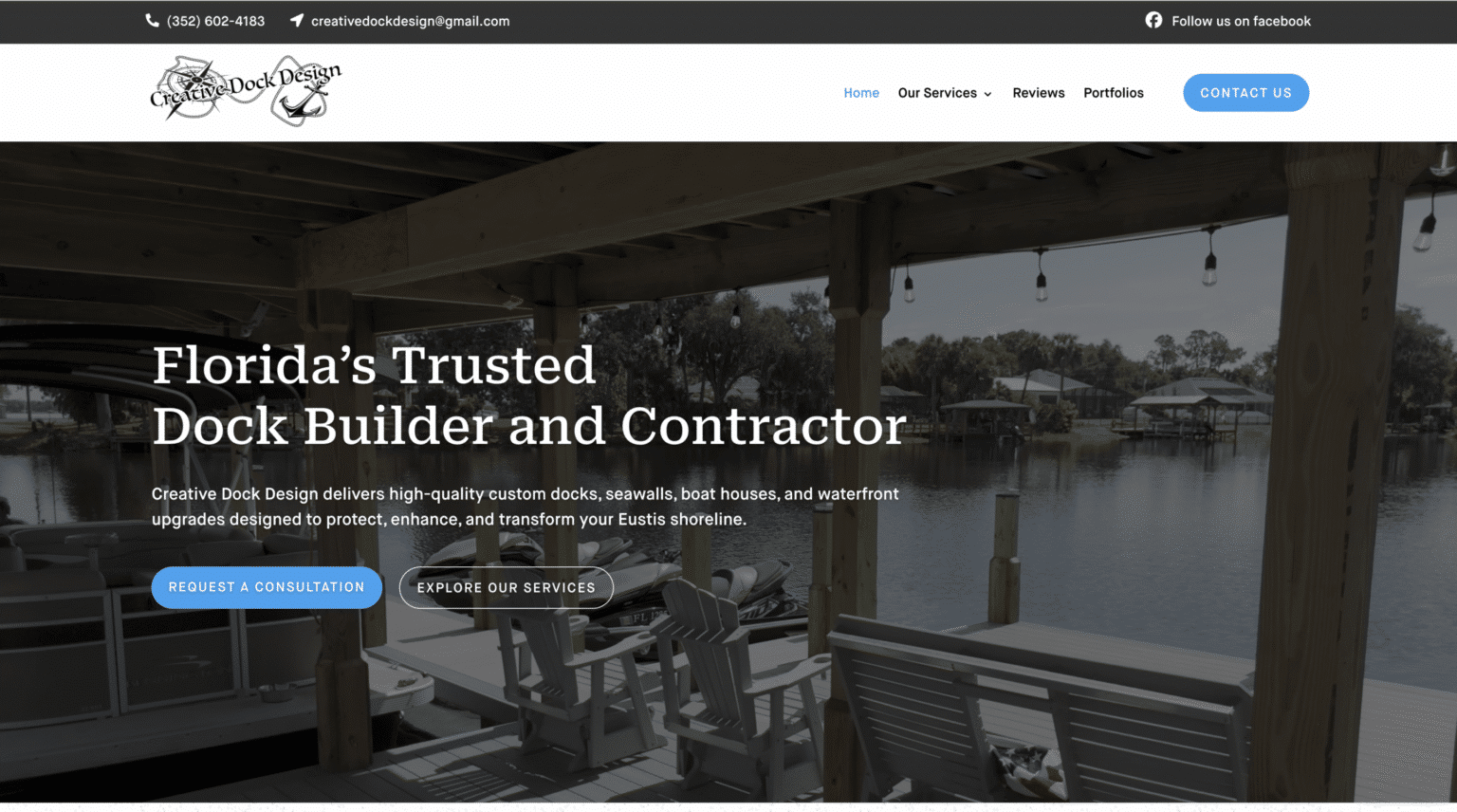
So, what is the best website builder for contractors who need a simple, credible lead-generation site? For most, it is the option that combines professional presentation with the least friction to launch and maintain. That may be a DIY builder if budget is tight and your needs are basic. It may be a freelancer if you want a custom touch without agency complexity. But very often, especially for busy owners, it is a managed website setup that keeps the site live, polished, supported, and current without becoming another job on your list.
That is the real benchmark. Not whether the platform is popular. Not whether the dashboard has fifty settings you will never use. What matters is whether the site builds trust fast and turns visitors into leads.
For contractors, simple done well almost always beats complicated done halfway.